skip to main |
skip to sidebar
Last
night David and I saw Kunstler by Jeffrey Sweet at Barrington Stage's
St. Germain Theatre. Jeff McCarthy ran away with the title role which might as
well have been written for him.
I
have seen him in numerous Barrington Stage productions over the past years,
mostly musicals, but in Kunstler he has found his role.
 The
play is set at a nameless University in 1995 where William Kunstler is
scheduled to speak. Outside many demonstrators are shouting hateful slogans
against the famous lawyer who has defended the likes of the Freedom Riders in
1961,the Chicago Seven in 1968, the American Indian Movement at Wounded Knee in
1968, and the Attica Prison Riot in 1971.
The
play is set at a nameless University in 1995 where William Kunstler is
scheduled to speak. Outside many demonstrators are shouting hateful slogans
against the famous lawyer who has defended the likes of the Freedom Riders in
1961,the Chicago Seven in 1968, the American Indian Movement at Wounded Knee in
1968, and the Attica Prison Riot in 1971.
He is introduced by a young law student played by Erin Roché, whom he involves
in the speech, getting her to play the part of one of the judges before whom he
is appearing and so on.
During
the course of the 90 minute play, he relives the various trials and
incarcerations he has lived through.
Mr. McCarthy uses his large sonorous voice and dramatic acting style to covey
the trauma he has lived through to great effect.
This could almost be a one-man play since the character of the student is not
really necessary to convey the life of this man.
Bravo to Mr. McCarthy and Barrington Stage for this fine opening event,
Today while teaching a voice lesson I found it necessary to deliver a short homily on the differences in the way one sings various types of songs.
My student, a young woman with a very pretty voice, brought to me some works she was singing in her chorus. We went over several solo parts that she was interested in performing.
She sings in a very good chorus of young people with a fine conductor. However, I have a few bones to pick with him on some of his ideas.
 For one thing, the idea that he has, as do many choral conductors of the present era, that women, especially sopranos, must sing without a trace of vibrato. This idea is apparently based on the singing of men and boys choirs, which is fine when one is dealing with men and boys choirs. But not when one is dealing with mature female voices. Even with young female voices!
Vibrato is a naturally occurring phenomenon in ALL voices, male and female. Even very young voices, when left to sing naturally, have a slight vibrato. This is caused by the air passing through the vocal chords as the involuntary muscles of the larynx produce the pitch. Trying to eliminate this action means one is holding one's larynx.
This is not a very good idea.
Any holding of the larynx, or any other part of the singing body, means one is creating tension. Tension is the enemy of good singing.
We discussed this idea today.
We also discussed some of the differences in solo singing and choral singing. When one is singing in a chorus, one must do what the conductor asks, however good or bad.
When singing a solo, one must follow the best possible use of the voice to produce beautiful sound, clear diction, and effortless singing.
ça va sans dire,
For one thing, the idea that he has, as do many choral conductors of the present era, that women, especially sopranos, must sing without a trace of vibrato. This idea is apparently based on the singing of men and boys choirs, which is fine when one is dealing with men and boys choirs. But not when one is dealing with mature female voices. Even with young female voices!
Vibrato is a naturally occurring phenomenon in ALL voices, male and female. Even very young voices, when left to sing naturally, have a slight vibrato. This is caused by the air passing through the vocal chords as the involuntary muscles of the larynx produce the pitch. Trying to eliminate this action means one is holding one's larynx.
This is not a very good idea.
Any holding of the larynx, or any other part of the singing body, means one is creating tension. Tension is the enemy of good singing.
We discussed this idea today.
We also discussed some of the differences in solo singing and choral singing. When one is singing in a chorus, one must do what the conductor asks, however good or bad.
When singing a solo, one must follow the best possible use of the voice to produce beautiful sound, clear diction, and effortless singing.
ça va sans dire,
As the French would say.
We also talked about the differences one must be aware of when singing classical music or pop music. Differences in rhythm: in a Schubert song, sing it like he wrote it; in Rodgers and Hammerstein, you can play around with the rhythms and even the tune.
Diction is another changeable part of the equation. In a classical song or aria, one should use more formal, accurate diction than is needed in a pop or show tune.
In every case one must sing freely and clearly to communicate the emotion to one's audience.
But don't trill or flip 'r's' in a pop song. Don't put a schwa after an 'n', 'm' or, 'ng' in any song. This seems to be a favorite of some conductors, even at the Met.
 When I attended a dress rehearsal of John Harbison's
Gatsby at the Met, Lorraine Hunt Lieberson, singing the role of Myrtle, had been instructed to sing her opening line as 'It's hell, but it's Home-muh'. I was sitting in the audience during a dress rehearsal, taking notes for her. Next to me was her husband, Peter Lieberson. We went backstage during the break and I asked her about this. She said that the Met diction coach want everyone to add the vowel sound after an 'n' or 'm'.
I told her the line came across as 'It's hell, but it's Homer'!
I suggested that when they repeated the scene she sing it once with an 'm-uh' and the next time with a correctly pronounced m- which is a sustained hum.
When I attended a dress rehearsal of John Harbison's
Gatsby at the Met, Lorraine Hunt Lieberson, singing the role of Myrtle, had been instructed to sing her opening line as 'It's hell, but it's Home-muh'. I was sitting in the audience during a dress rehearsal, taking notes for her. Next to me was her husband, Peter Lieberson. We went backstage during the break and I asked her about this. She said that the Met diction coach want everyone to add the vowel sound after an 'n' or 'm'.
I told her the line came across as 'It's hell, but it's Homer'!
I suggested that when they repeated the scene she sing it once with an 'm-uh' and the next time with a correctly pronounced m- which is a sustained hum.
 When Peter and I went back the next time, we both told her to just sing a beautiful 'm' on the word and it would sing to the back of the hall.
And that's how she did it!
I realize that I am very picky about things like diction. I was a student and later a colleague of Madeleine Marshall, and have used her wise advice during my entire teaching career. Madeleine used to say 'I don't care how you speak, but when you sing, it must be clear and natural sounding.
That has been one of my mottos for all my teaching years.
I have covered all of these idea in my various books, I think there are six of them now, but it never hurts to rip off a special blog about wonderful singing!
When Peter and I went back the next time, we both told her to just sing a beautiful 'm' on the word and it would sing to the back of the hall.
And that's how she did it!
I realize that I am very picky about things like diction. I was a student and later a colleague of Madeleine Marshall, and have used her wise advice during my entire teaching career. Madeleine used to say 'I don't care how you speak, but when you sing, it must be clear and natural sounding.
That has been one of my mottos for all my teaching years.
I have covered all of these idea in my various books, I think there are six of them now, but it never hurts to rip off a special blog about wonderful singing!
How many times have you heard a frustrated mother say to an obstreperous tot 'Speak in your indoor voice!' This often calms the moment which was getting out of hand volume-wise.
In singing one must sing in your 'outdoor voice'. This does not mean you holler or scream, but it also does not mean you don't mumble.
The whole point of vocal performance is to be heard in some sort of hall and mumbling just doesn't cut it.
 This lady knew how to sing in her outdoor voice!
In working with students who are trying to sing with their indoor voice, I emphasize using your energy to easily project the sound. Your air is your energy. Indoor voices are fine in small noisy children but don't work at the Met.
A combination of the best possible breathing technique with a sense of the distance into which you are singing will produce the correct amount of sound in any room.
To simplify: the singing breath should begin by listening to an 'aw' sound as the air passes down your throat as you inhale. Then, immediately return the air as sound. I have students bounce a tennis ball to get this timing right. Inhale as the ball hits the floor and sing as you catch it. This way you use the deep breath you have just taken to its best advantage and the whole breathing thing becomes fun and easy.
Choose a point somewhere in the distance to which you sing. You do this automatically when you speak to someone on the other side of the room. Use the image of distance to allow the voice easily to project.
Timid singers don't have careers. Be brave! Be bold! Sing with your outdoor voice.
Last Friday night David and I, with our friend Kate, paid my last visit for the season to the Lake Shore Cafe and JJ and the Jazz Masters. This group is a sensational mix of virtuosic Jazz performers.
JJ, at age 85, is the percussionist and has still got it! Gina Gibson is the excellent vocalist who can ad lib with the best of them.
 Kobi Knight is the extraordinary vibes player, a true genius at the instrument. Bernard Scavello is the sax player who can riff with the best.
Dave Drazin the pianist and Dan McNaughton, bass player are equally good.
I got my first taste of Dixieland Jazz or 'Two-Beat' at Nick's in the Village in the 1950's. An odd taste, you may say, for a classical musician, but the improvisation that is the essence of 'Two-Beat' is right up there with ornamentation in Bach.
A week or so earlier we were at the Lake Shore to celebrate my birthday and Gina serenaded me with 'Happy Birthday'. The last time I had a Dixieland 'Happy Birthday' was at Nick's when I was 21! Long time ago
Yesterday I flew back to Rood Hill Farm from Chicago. It's been a busy winter there with some time in New Mexico, Arizona, Utah, and Colorado.
As I approached the barrier where you get zapped for bombs, etc., the man said 'Shoes!', pointing to my feet. I said 'I'm 87 years old'. He generously said 'You look 57', but let me through.
Thank was a nice farwell to Chicago until next fall!
Kobi Knight is the extraordinary vibes player, a true genius at the instrument. Bernard Scavello is the sax player who can riff with the best.
Dave Drazin the pianist and Dan McNaughton, bass player are equally good.
I got my first taste of Dixieland Jazz or 'Two-Beat' at Nick's in the Village in the 1950's. An odd taste, you may say, for a classical musician, but the improvisation that is the essence of 'Two-Beat' is right up there with ornamentation in Bach.
A week or so earlier we were at the Lake Shore to celebrate my birthday and Gina serenaded me with 'Happy Birthday'. The last time I had a Dixieland 'Happy Birthday' was at Nick's when I was 21! Long time ago
Yesterday I flew back to Rood Hill Farm from Chicago. It's been a busy winter there with some time in New Mexico, Arizona, Utah, and Colorado.
As I approached the barrier where you get zapped for bombs, etc., the man said 'Shoes!', pointing to my feet. I said 'I'm 87 years old'. He generously said 'You look 57', but let me through.
Thank was a nice farwell to Chicago until next fall!
Last night Peggy, Jim,David and I saw a delightful production of The Most Happy Fella at the No Exit Cafe in Rogers Park on the far north side of the city. Fella is a wonderful musical by Frank Loesser based on the book They Knew What They Wanted by Sidney Howard. I saw the original production on Broadway in 1953 with Robert Weede of the Met singing the title role.
Tonight's Tony was no Robert Weede but the rest of the cast were fine singers and produced a really good show. William Roberts was Tony and while possessed of a fairly good bass-baritone voice tended to push at the top.
Molly Hernandez was a very young Rosabella. Pretty voice and a good actress. She is a sophomore at Loyola University.
Ken Singleton was Joe and sang with a fine tenor voice and was good looking enough for us to see why Rosabella would fall in love with him at once instead of the middle aged Tony.
Courtney Jones was Cleo and practically stole the show in her opening number about 'sore feet' as well as in 'Big D'. A real winner!
 The rest of the cast had remarkable good voices and the mens' ensembles were especially good. 'Standin' on the Corner' and 'Abondanza'.
The Cafe is a fairly small room and the evening included dinner, which was passable. The music director was Jeremy Ramey and was exceptional. He played the piano with fury and tried to keep the three string players together. When we arrived early for dinner he appeared to be teaching the show to the violinist who never did quite play in tune, especially in third position.
It was a fun evening.
The rest of the cast had remarkable good voices and the mens' ensembles were especially good. 'Standin' on the Corner' and 'Abondanza'.
The Cafe is a fairly small room and the evening included dinner, which was passable. The music director was Jeremy Ramey and was exceptional. He played the piano with fury and tried to keep the three string players together. When we arrived early for dinner he appeared to be teaching the show to the violinist who never did quite play in tune, especially in third position.
It was a fun evening.
Last night David and I saw Tchaikovsky's Eugene Onegin at Chicago Lyric Opera. It was a treat to hear this gorgeous score once more.
Again, Chicago Lyric is spending its bucks on singers instead of scenery, which is alright with me.
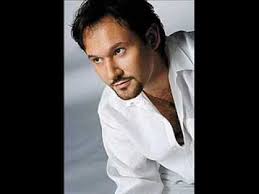 Mariusz Kwiecien sang the title role with an excellent baritone voice. He has sung this role at the Met and internationally.
 Ana Maria Martinez was Tatiana. Before the opera began someone came on stage to announce that Ms. Martinez was singing with a cold and asked the audience's indulgence. No need. She sang beautifully.
It reminded me of a performance of Aida I heard in Vienna some years ago when the stage manager came out and announced that Ms. Price (Leontyne) would be replaced by someone, and Mr. 'whoever the tenor was' also would not sing, ending with 'Fiorenza Cossotto was ill- but would sing anyway'. Of course she tore the house down, as did Ms. Martinez.
Ana Maria Martinez was Tatiana. Before the opera began someone came on stage to announce that Ms. Martinez was singing with a cold and asked the audience's indulgence. No need. She sang beautifully.
It reminded me of a performance of Aida I heard in Vienna some years ago when the stage manager came out and announced that Ms. Price (Leontyne) would be replaced by someone, and Mr. 'whoever the tenor was' also would not sing, ending with 'Fiorenza Cossotto was ill- but would sing anyway'. Of course she tore the house down, as did Ms. Martinez.
 Lensky was wonderfully sung by Charles Castronovo. This is an amazing tenor voice.
 Equally fine was the Prince Gremin of Dmitri Belosselskiy. A rich sonorous voice in his one aria in the final act.
The rest of the cast sang beautifully. Chicago seems to know how to pick 'em!
Again the limitations of the Lyric stage were obvious. Basically one set, three walls which changed with the lighting, very little stage furnishings, a floor covered with leaves for the first half of the opera- that was it. Lots of chairs encircling the stage for two acts???
Lyric's huge chorus sang wonderfully but often seemed stuffed onto the stage. Alejo Perez conducted this wonderful music.
I think I heard my dear, late mentor Olga Averino sing Tatiana's wonderful 'letter scene' at some time or other. Olga's Godfather was Modest Tchaikovsky, brother of Peter. A beautiful connection to have when hearing this opera.
Equally fine was the Prince Gremin of Dmitri Belosselskiy. A rich sonorous voice in his one aria in the final act.
The rest of the cast sang beautifully. Chicago seems to know how to pick 'em!
Again the limitations of the Lyric stage were obvious. Basically one set, three walls which changed with the lighting, very little stage furnishings, a floor covered with leaves for the first half of the opera- that was it. Lots of chairs encircling the stage for two acts???
Lyric's huge chorus sang wonderfully but often seemed stuffed onto the stage. Alejo Perez conducted this wonderful music.
I think I heard my dear, late mentor Olga Averino sing Tatiana's wonderful 'letter scene' at some time or other. Olga's Godfather was Modest Tchaikovsky, brother of Peter. A beautiful connection to have when hearing this opera.