skip to main |
skip to sidebar
Last night I attended a concert which was a part of the 'Festival of Contemporary Music' at Tanglewood. Tanglewood is 'just up the road' from Rood Hill Farm but I don't get there very often anymore.
Last night, with two friends, I heard a remarkable concert with music by Niccolo Castiglioni and Oliver Knussen. Fellows of the Tanglewood Music Center provided the very fine orchestra and singers.
The first work, Inverno In-Ver by Castigliano, was a series of short sketches, musical poems as it were, about the iciness and whiteness of winter. While interesting in its plan and orchestration, it is not the work I want to have with me when stranded on a desert island. There is a certain sameness to many of the movements and the orchestration is so brilliant, both in concept and in actual sound, that I found it irritating. Mr. Knussen conducted this work wonderfully well and obviously had this difficult score fixed securely in his mind.
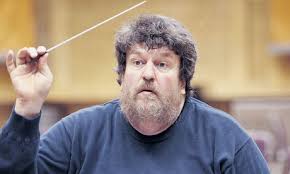 Second on the program was Mr. Knussen's own Higglety, Pigglety, Pop! or There Must Be More to Life, a charming fantasy composed in collaboration with the brilliant Maurice Sendak, based on his book of the same name. Netia Jones was the video designer and live video performer and had created a remarkable animated film that was shown on a large screen at the rear of the stage in Ozawa Hall.
One of my friends attending the concert with me was Mike Miller, the illustrator, who introduced Knussen to Sendak years ago at Tanglewood, thereby setting in motion this collaboration.
Second on the program was Mr. Knussen's own Higglety, Pigglety, Pop! or There Must Be More to Life, a charming fantasy composed in collaboration with the brilliant Maurice Sendak, based on his book of the same name. Netia Jones was the video designer and live video performer and had created a remarkable animated film that was shown on a large screen at the rear of the stage in Ozawa Hall.
One of my friends attending the concert with me was Mike Miller, the illustrator, who introduced Knussen to Sendak years ago at Tanglewood, thereby setting in motion this collaboration.
 In this work, Knussen's brilliant and humorous score set forth Sendak's tale of his little dog, Jennie, who goes on an imaginary voyage of discovery, finally to find her way back home at the end of the opera. The role of Jennie was brilliantly sung by the wonderful mezzo-soprano Kate Jackman, who embodied every inch of Jennie.
The Potted Plant, Baby, and Mother Goose were sung by soprano Ilana Zarankin, Rhoda and the Baby's Mother were sung by soprano Sharon Harms, the Cat-Milkman was Zach Finkelstein, a remarkable tenor, the Lion was Richard Ollarsaba, bass-baritone, and the Pig-Ash Tree was performed by Douglas Williams.
All of the singers were very fine, especially Ms. Jackman and Mr. Finkelstein.
The demanding vocal score fit Ms. Jackson like a glove. If I were to make any criticism, it would be that the roles for the other soprano had so much stratospheric singing that it was impossible to hear the text. On the other hand, some of the bass arias went so low that these young men really didn't have these notes in their voice. Composers should realize that while some sopranos are able to sing incredibly high pitches, one should not put a lot of text on the high C's and above if you want anyone to get an idea about what the singer is trying to convey textually. The reverse is true for the men, of course. If you don't have a solid low E, don't try to sing Baron Ochs.
The opera is a work of two geniuses and I am happy that I could be there.
In this work, Knussen's brilliant and humorous score set forth Sendak's tale of his little dog, Jennie, who goes on an imaginary voyage of discovery, finally to find her way back home at the end of the opera. The role of Jennie was brilliantly sung by the wonderful mezzo-soprano Kate Jackman, who embodied every inch of Jennie.
The Potted Plant, Baby, and Mother Goose were sung by soprano Ilana Zarankin, Rhoda and the Baby's Mother were sung by soprano Sharon Harms, the Cat-Milkman was Zach Finkelstein, a remarkable tenor, the Lion was Richard Ollarsaba, bass-baritone, and the Pig-Ash Tree was performed by Douglas Williams.
All of the singers were very fine, especially Ms. Jackman and Mr. Finkelstein.
The demanding vocal score fit Ms. Jackson like a glove. If I were to make any criticism, it would be that the roles for the other soprano had so much stratospheric singing that it was impossible to hear the text. On the other hand, some of the bass arias went so low that these young men really didn't have these notes in their voice. Composers should realize that while some sopranos are able to sing incredibly high pitches, one should not put a lot of text on the high C's and above if you want anyone to get an idea about what the singer is trying to convey textually. The reverse is true for the men, of course. If you don't have a solid low E, don't try to sing Baron Ochs.
The opera is a work of two geniuses and I am happy that I could be there.
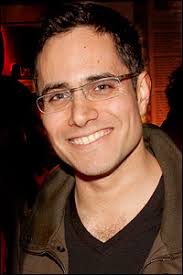 After what has been,for me, at least, an under-whelming season at Barrington Stage, tonight they hit the jackpot with a new play by Rajiv Joseph. It is called The North Pool and it is a winner. It is a terse, almost frightening story of an encounter between a high school vice-principal and a senior in the school.
The senior is Syrian and is new to the high school, having transferred from a fancy private school. He is called into the office of the vice-principal who then proceeds to conduct an inquisition worthy of an Auto da fe. These were popular with the Roman Catholic hierarchy from the 13th to the 16th centuries, especially in Spain and Portugal. Nothing good ever came from them.
The principal alternates between seeming to chat with the young man and suddenly raging at him. He accuses him of cutting classes, vandalism, and various other misdemeanors, all of which he young man denies.
Finally, inflamed by anger, the young man turns on the principal and accuses him of perversion. Apparently this is the tale that has gone through the school
It turns out that both of them have been involved in one way or another with a young woman who has committed suicide. She, eager to make some big money participates in a wild party, where she is paid to have sex with a number of men, getting beaten-up in the process. The young man has told her about these kinds of parties that pay a lot of money for this sort of thing and feels responsible for her death.
She comes to the principal, bruised and beaten, who has been a close friend and mentor, tries to kiss him, and is pushed away. He already has a reputation that is not too savoury. He also feels that had he not pushed her away, she might still be alive.
Both the principal and the student feel guilty, thinking that it is their fault that the young woman commited suicide. Each has lived in torture with this grief ever since her death.
After what has been,for me, at least, an under-whelming season at Barrington Stage, tonight they hit the jackpot with a new play by Rajiv Joseph. It is called The North Pool and it is a winner. It is a terse, almost frightening story of an encounter between a high school vice-principal and a senior in the school.
The senior is Syrian and is new to the high school, having transferred from a fancy private school. He is called into the office of the vice-principal who then proceeds to conduct an inquisition worthy of an Auto da fe. These were popular with the Roman Catholic hierarchy from the 13th to the 16th centuries, especially in Spain and Portugal. Nothing good ever came from them.
The principal alternates between seeming to chat with the young man and suddenly raging at him. He accuses him of cutting classes, vandalism, and various other misdemeanors, all of which he young man denies.
Finally, inflamed by anger, the young man turns on the principal and accuses him of perversion. Apparently this is the tale that has gone through the school
It turns out that both of them have been involved in one way or another with a young woman who has committed suicide. She, eager to make some big money participates in a wild party, where she is paid to have sex with a number of men, getting beaten-up in the process. The young man has told her about these kinds of parties that pay a lot of money for this sort of thing and feels responsible for her death.
She comes to the principal, bruised and beaten, who has been a close friend and mentor, tries to kiss him, and is pushed away. He already has a reputation that is not too savoury. He also feels that had he not pushed her away, she might still be alive.
Both the principal and the student feel guilty, thinking that it is their fault that the young woman commited suicide. Each has lived in torture with this grief ever since her death.
 The two actors, Remi Sandri, as the principal, and Babak Tafti, as the student, are forceful and wonderful in their roles. They leave the audience gasping by the final moments of the play. They keep the audience on the edge of their seats throughout the performance.
 The play was brilliantly directed by Giovanna Sardelli.
These are 80 minutes of the most dynamic play- writing I have witnessed in a long time.
Good for you Barrington Stage!
The play was brilliantly directed by Giovanna Sardelli.
These are 80 minutes of the most dynamic play- writing I have witnessed in a long time.
Good for you Barrington Stage!
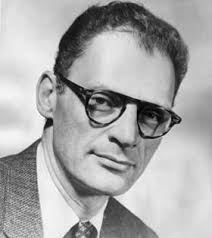 Barrington Stage is presenting Arthur Miller's over-wrought tragedy All my sons. And no, the title of this blog is not a misprint, because the play is all about post World War II guilt or the lack thereof.
It is based on a true story of a woman who informed on her father who sold faulty parts to the military during the war. It also refers to The Wild Duck of Henrik Ibsen in which two partners in business divide, one taking the blame and responsibility for a similar action.
Barrington Stage is presenting Arthur Miller's over-wrought tragedy All my sons. And no, the title of this blog is not a misprint, because the play is all about post World War II guilt or the lack thereof.
It is based on a true story of a woman who informed on her father who sold faulty parts to the military during the war. It also refers to The Wild Duck of Henrik Ibsen in which two partners in business divide, one taking the blame and responsibility for a similar action.
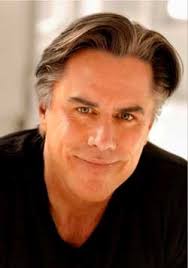 Joe Keller is the partner who was exonerated after being charged with shipping damaged plane cylinder heads, while his partner, Steve Deever, goes to jail for the crime. Steve does not appear in the play. Jeff McCarthy, a regular at Barrington Stage played this role. I know him more as a musical comedy performer, so it was a bit difficult to accept him in this grim role of a man who has convinced himself that he stayed out of jail for the good of his family.
 Lisbeth MacKay was much more believable as his wife, Kate. Josh Clayton was believable in the role of their son, Chris and Rebecca Brooksher, as, Ann, the daughter of jailed Steve Deever was good in her role as well. In an almost biblical reference, Chris is planning to marry Ann who was engaged to marry his brother, who was killed in the war. It turns out that the brother was aware of his father's crime and deliberately flew to his death.
Everyone expresses a lot of angst. At the end Chris confronts his father with his duplicity and threatens to take him to the police. The father shoots himself. So everyone feels guilty. The play probably would have struck me differently had I seen it in 1947 when the war and war barons were a part of our lives, but at this point it seems dated.
This was Miller's second play. His first,The Man Who had All the Luck, closed after four performances. It seems to me that Miller was just getting his stride in this one, which of course, led to Death of a Salesman.
There have been several revivals of of the work and two film versions. It has a dramatic, emotional thrust, but to my way of thinking, borders on the melodramatic.
Lisbeth MacKay was much more believable as his wife, Kate. Josh Clayton was believable in the role of their son, Chris and Rebecca Brooksher, as, Ann, the daughter of jailed Steve Deever was good in her role as well. In an almost biblical reference, Chris is planning to marry Ann who was engaged to marry his brother, who was killed in the war. It turns out that the brother was aware of his father's crime and deliberately flew to his death.
Everyone expresses a lot of angst. At the end Chris confronts his father with his duplicity and threatens to take him to the police. The father shoots himself. So everyone feels guilty. The play probably would have struck me differently had I seen it in 1947 when the war and war barons were a part of our lives, but at this point it seems dated.
This was Miller's second play. His first,The Man Who had All the Luck, closed after four performances. It seems to me that Miller was just getting his stride in this one, which of course, led to Death of a Salesman.
There have been several revivals of of the work and two film versions. It has a dramatic, emotional thrust, but to my way of thinking, borders on the melodramatic.
I went to a marvelous party!
I must say the fun was intense!
We all had to do what the people we knew
Would be doing a hundred years hence!
Dear Cecil arrived wearing armor,
Some shells and a black feather boa.
Poor Millicent wore a surrealist comb
Made of bits of mosaic from St. Peter's in Rome,
But the weight was so great that she had to go home.
I couldn't have liked it more!
-Noel Coward
And it was a marvelous party given by two dear friends, Eric and Jeff, who were celebrating thirty years together.
The weekend began with an elegant room in the Renaissance Hotel on Public Square in Cleveland. The hotel was built around 1917 and has been completely restored to its former grandeur.
Friday evening we had a gourmet dinner at Fire, a very high-end restaurant on Shaker Square near where they live.
Saturday morning was a tour on 'Lolly the Trolley', which took us all around Cleveland and Shaker Heights. The tour guide didn't miss a brick in this tour. Cleveland is in an odd place right now, having gone through a major decline and now bouncing back to its former grandeur. But much of the tour was 'There is where the elegant mansion of Mr. Soandso formerly stood.' But it was enjoyable.
 That evening we had a cocktail cruise out into Lake Erie and then up the Cuyahoga River. Much of the riverside is industrial waste, so it wasn't exactly like the scenic Hudson, but I had a charming cruise companion which made it a great evening.
Then back to Whisky Park for a glorious picnic. These guys went all out!
This morning there was a champagne breakfast at their sensational apartment in Moreland Court neat Shaker Square. This is a 1927 apartment building that has been compared to the Dakota in New York City.
That evening we had a cocktail cruise out into Lake Erie and then up the Cuyahoga River. Much of the riverside is industrial waste, so it wasn't exactly like the scenic Hudson, but I had a charming cruise companion which made it a great evening.
Then back to Whisky Park for a glorious picnic. These guys went all out!
This morning there was a champagne breakfast at their sensational apartment in Moreland Court neat Shaker Square. This is a 1927 apartment building that has been compared to the Dakota in New York City.
Eric and friends
Jeff and friends
Dear Eric and Jeff, I can hardly wait for your fiftieth!!
Tonight my friend Sue and I saw a play that was trying to be a play at Barrington Stage 2. It was Dr. Ruth, All the Way by Mark St. Germain. He is the author of Freud's Last Session and The Best of Enemies both of which have been produced with some success by Barrington Stage in the past.
Appawently, Dr. Wuth had twouble pwonouncing the letter 'R'. This, like any speech defect, is unfortunate and I should not be making fun of it. But the actress who portrayed her, Debra Jo Rupp, or possibly Julie Boyd, the director, made such a big deal of this problem that I was ready to scream by the end of the first act. I was hoping that Dr. Ruth had somehow taken advantage of a course in Speech Therapy between Acts I and II.
No such luck.
Every single 'R' for two hours was lovingly pronounced as a 'W'. Remember the Japanese water torture?
Having never really seen or heard Dr. Ruth much in her radio and television heyday, I have no idea how pronounced (pardon the pun) this problem is in real life. But it was, to me at least, terribly annoying in the play.
 I think that the dialect coach, Stephen Gabis, must share some of the blame for this. I don't personally know many Germans or Jews who habitually pronounce an 'R' like a 'W'. The enthusiasm with which Ms. Rupp lisped her way through the role was commendable, but, I thought, mis-guided.
Then there is the matter of the play, or non-play, as may be. It covers the tragic story of the life of Ruth K. Westheimer, who escaped from Nazi Germany after her parents had been taken away, later to die in a concentration camp, her life in Israel, Paris, and finally Washington Heights in New York City. Her three marriages, two children, and her rise to become a famous sex therapist on radio and television.
While Ms. Rupp played the role with a good bit of emotion, I was just never convinced that it was real. I am not a playright, but somehow this should have come off better.
The rest of the audience cheered at the end, so I guess I am just a grumpy old man.
So sue me!
I think that the dialect coach, Stephen Gabis, must share some of the blame for this. I don't personally know many Germans or Jews who habitually pronounce an 'R' like a 'W'. The enthusiasm with which Ms. Rupp lisped her way through the role was commendable, but, I thought, mis-guided.
Then there is the matter of the play, or non-play, as may be. It covers the tragic story of the life of Ruth K. Westheimer, who escaped from Nazi Germany after her parents had been taken away, later to die in a concentration camp, her life in Israel, Paris, and finally Washington Heights in New York City. Her three marriages, two children, and her rise to become a famous sex therapist on radio and television.
While Ms. Rupp played the role with a good bit of emotion, I was just never convinced that it was real. I am not a playright, but somehow this should have come off better.
The rest of the audience cheered at the end, so I guess I am just a grumpy old man.
So sue me!
I have been reading a biography of Queen Elizabeth the Queen Mother by Lady Colin Campbell which does a pretty good hatchet job on any reputation for sweetness the Queen Mum ever had.
According to Lady Campbell, the Queen Mum and her younger brother, David, were conceived on the family cook by her father with the consent of her mother who had already borne a number of children and wasn't up to producing any more. Apparently this was common practice among the upper class in England at the time of her birth.

 Her two daughters, Queen Elizabeth II and Princess Margaret Rose were conceived by artificial insemination with King George's sperm because the Queen Mum wasn't interested in having sex with him.
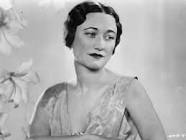 She was a mover and shaker behind the scenes in getting Edward VIII to abdicate shortly after he became King at the death of George V. She had had her cap set for Edward, or Albert, as he was known in the Royal family, and was furious when she had to settle for Bertie, his less appealing younger brother, who became George VI. As a result she hated Wallis Warfield with a vengeance when she ran off with Edward. The Duke and Duchess of Windsor, as they were styled, were ex-patriots for the rest of their lives. Edward was allowed to come back to England when his mother, Queen Mary died, and Wallis came back for Edward's funeral.
 Lady Campbell liberally drops names and titles by the score as she continues to trash the Queen Mum. I wonder what the Royal family thinks about this. The Queen Mum is made out to be a controlling and vicious woman who gave the impression of being soft and cuddly.
If this seems complicated, it is. Juicy, like a Barbara Cartland novel (Diana's grandmother- I can drop names too!) But a good read if you like scandal.
Lady Campbell liberally drops names and titles by the score as she continues to trash the Queen Mum. I wonder what the Royal family thinks about this. The Queen Mum is made out to be a controlling and vicious woman who gave the impression of being soft and cuddly.
If this seems complicated, it is. Juicy, like a Barbara Cartland novel (Diana's grandmother- I can drop names too!) But a good read if you like scandal.
'Three cheers and, damn it, c'est la vie! I got through all of last year, and I'm here! Look who's here! I'm still here!
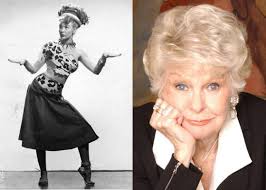 I know just how Elaine Stritch felt when she sang that song in her one woman show a number of years ago. Connecticut Public Television showed a filming of that show tonight. I had seen her do it twice on Broadway and I was still blown away tonight to see it again. She was probably 80 when she did it. I think she's 88 or 90 by now, but she's still here. (I just looked it up. She's 87!)
 I saw her do Madame Arnfelt in Stephen Sondheim's A Little Night Music about a year ago on Broadway. She was the one you watched on stage. No one dared breath while she was doing 'Liasons'. There are very few actresses that can hold an audience in the palm of their hand like Elaine does.
I first saw her singing 'Zip' in the revival of Pal Joey of Rodgers and Hart in the fifties. It was the same back then. She stopped the show! Sail Away of Noel Coward, Company and 'Here's to the Ladies that Lunch' of Sondheim, and on and on. She has been a fixture on Broadway and the West End of London for over a half century.
It's fairly obvious why I am impressed with these old Babes who can still do it- Barbara Cook is another one. It must be because I am in their generation. And I can still do it- more or less!
Peggy and I are preparing to do two cabarets in September and I will be doing three 'cello-piano concerts with Andrea in October. The Grieg Sonata, no less.
And I'm still here, too!
I saw her do Madame Arnfelt in Stephen Sondheim's A Little Night Music about a year ago on Broadway. She was the one you watched on stage. No one dared breath while she was doing 'Liasons'. There are very few actresses that can hold an audience in the palm of their hand like Elaine does.
I first saw her singing 'Zip' in the revival of Pal Joey of Rodgers and Hart in the fifties. It was the same back then. She stopped the show! Sail Away of Noel Coward, Company and 'Here's to the Ladies that Lunch' of Sondheim, and on and on. She has been a fixture on Broadway and the West End of London for over a half century.
It's fairly obvious why I am impressed with these old Babes who can still do it- Barbara Cook is another one. It must be because I am in their generation. And I can still do it- more or less!
Peggy and I are preparing to do two cabarets in September and I will be doing three 'cello-piano concerts with Andrea in October. The Grieg Sonata, no less.
And I'm still here, too!